

Something is wrong with how we live together, both in our communities and in this world. Despite extraordinary advances in science, technology, and our ability to organize human activity, we continue to struggle with inequality, conflict, alienation, and environmental destruction. We have become remarkably capable of transforming our world, yet we seem far less capable of understanding the consequences of those transformations. Even our efforts to solve problems often create new ones.
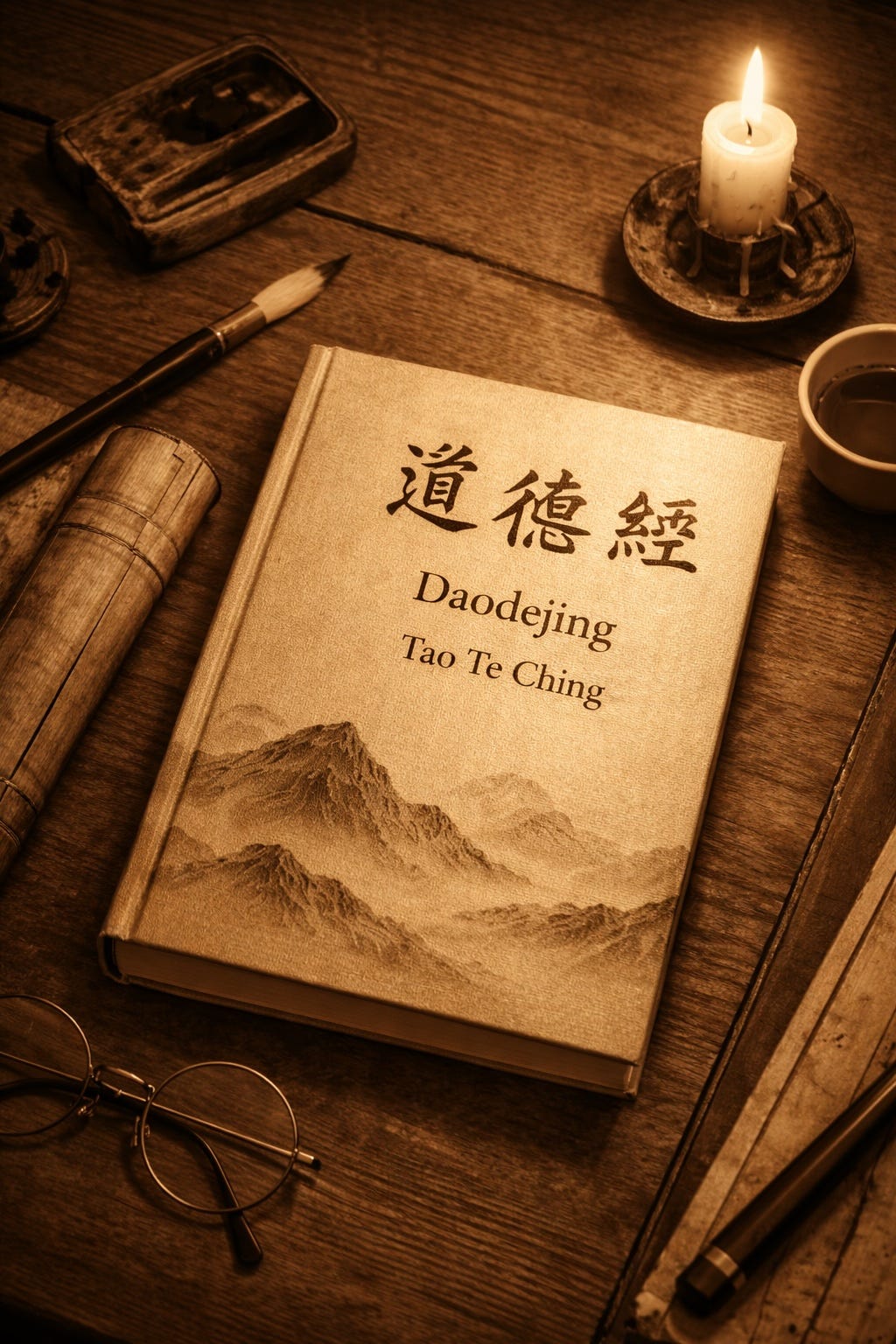
I read the Daodejing because I believe it offers an important perspective on why this happens.
More than two thousand years ago, the authors of the Daodejing were confronting a world undergoing profound social and political transformation. Rulers and their advisers were developing increasingly sophisticated ways to organize populations, direct human behavior, accumulate resources, and strengthen their states. Many believed they could achieve a better-ordered society by deliberately cultivating knowledge, virtue, desire, and obedience.
The Daodejing, as I read it, challenges something more fundamental than the particular methods they employed. It questions the assumptions about reality those methods depended on.
We tend to think of ourselves as individuals in a world of separate things, acting on one another to achieve our purposes. We construct categories, establish values, and organize our relationships around distinctions that we come to regard as natural. We then attempt to make the world conform to the order we have imagined.
But reality does not consist of independent things that we can understand or manipulate in isolation. Everything exists through relationships and processes, continually arising and changing through the interaction of countless conditions. We are not separate from this unfolding reality. We are expressions of it, and everything we do participates in changing it.
All action is co-action.
This is why I find the Daodejing so compelling. It does not merely offer another set of values to adopt or rules to follow. It invites us to reconsider how we understand the world in the first place.
How much of what we believe matters in life have we been taught to believe? How many of our desires arise from needs that sustain our wellbeing, and how many have been cultivated by systems that benefit from our pursuit of them? How often do we mistake the categories and values we have constructed for the nature of reality itself?
These questions are not just philosophical exercises. How we perceive the world shapes how we experience it, and how we experience it shapes how we act. Our perceptions, desires, and actions continually reinforce one another. If they are misaligned with reality, they may be reproducing the very conditions that cause us distress.
The Daodejing offers a way to interrupt this cycle. Through observation, unlearning, loosening the hold of manufactured desires, and acting without contrivance, we can begin to recognize the difference between the world as we have been taught to see it and the relationships and processes through which it actually unfolds.
This is not a promise that we can escape our conditioning or arrive at some final, objective understanding of reality. Nor is it a promise of a world without conflict, suffering, or uncertainty. We are finite beings, always working with incomplete knowledge, shaped by circumstances we did not choose and participating in consequences we cannot fully anticipate.
But recognizing these limitations changes how we approach life. It encourages humility over certainty, curiosity over judgment, cooperation over contention, and appreciation for the conditions that sustain life rather than an endless pursuit of socially manufactured rewards.
Importantly, I do not read the Daodejing as a call to withdraw from society or abandon our efforts to make the world better. Quite the opposite. I read it as an invitation to participate more thoughtfully in the world we are part of.
We cannot avoid changing the world. Every action, including inaction, participates in the unfolding relationships that constitute our lives. The question is not whether we will change the world, but how our understanding of our impact shapes the changes we participate in.
This brings me to what I see as the Daodejing’s central message: When our politics are misaligned with the nature of reality, everyone and everything suffers. Not because we can somehow violate how reality works, but because misunderstanding it can lead us to act against our own interests and the interests of the larger living world we depend on.
The tragedy is that we can become extraordinarily successful at achieving goals that ultimately undermine our wellbeing. We can build powerful institutions, accumulate enormous wealth, and develop technologies capable of transforming the planet, all while diminishing the relationships and conditions that make life possible and meaningful.
I read the Daodejing because it helps me recognize this possibility, not only in our political and economic institutions, but in my own assumptions, desires, and actions.
And I continue reading it because I do not believe we need another grand design for how the world ought to be. We need to understand better the world we actually inhabit, recognize our place within it, and discover ways of living together that work with, rather than against, the relationships we depend on.
For me, I call this the Way of Kinship. It begins with recognizing that we are not separate individuals struggling to find our place in an indifferent world. We are participants in an extraordinary, interconnected, and continually unfolding reality. Our wellbeing cannot ultimately be separated from others’ wellbeing or from the living world that sustains us.
The Daodejing does not give us a blueprint for creating such a world. It offers something I find far more valuable: a way of learning to see the world differently.
And when we see the world differently, we can begin to live differently.
Continue the Conversation
Ideas become more meaningful when we explore them together. If this article sparked a thought or raised a question, I’d love to hear your perspective in the comments. And if you found it worthwhile, please consider sharing it with others who might be interested.
If you’d like to take the conversation further, you’re warmly invited to join us at Kinship Cafe, where we explore these ideas together and consider what they mean for how we live and relate to one another.